Most retail LED screen problems don’t show up on installation day.
They show up three months later, when the screen costs more to run than expected, the content hasn’t changed since launch, or a repair takes two weeks because nobody checked who actually services it locally.
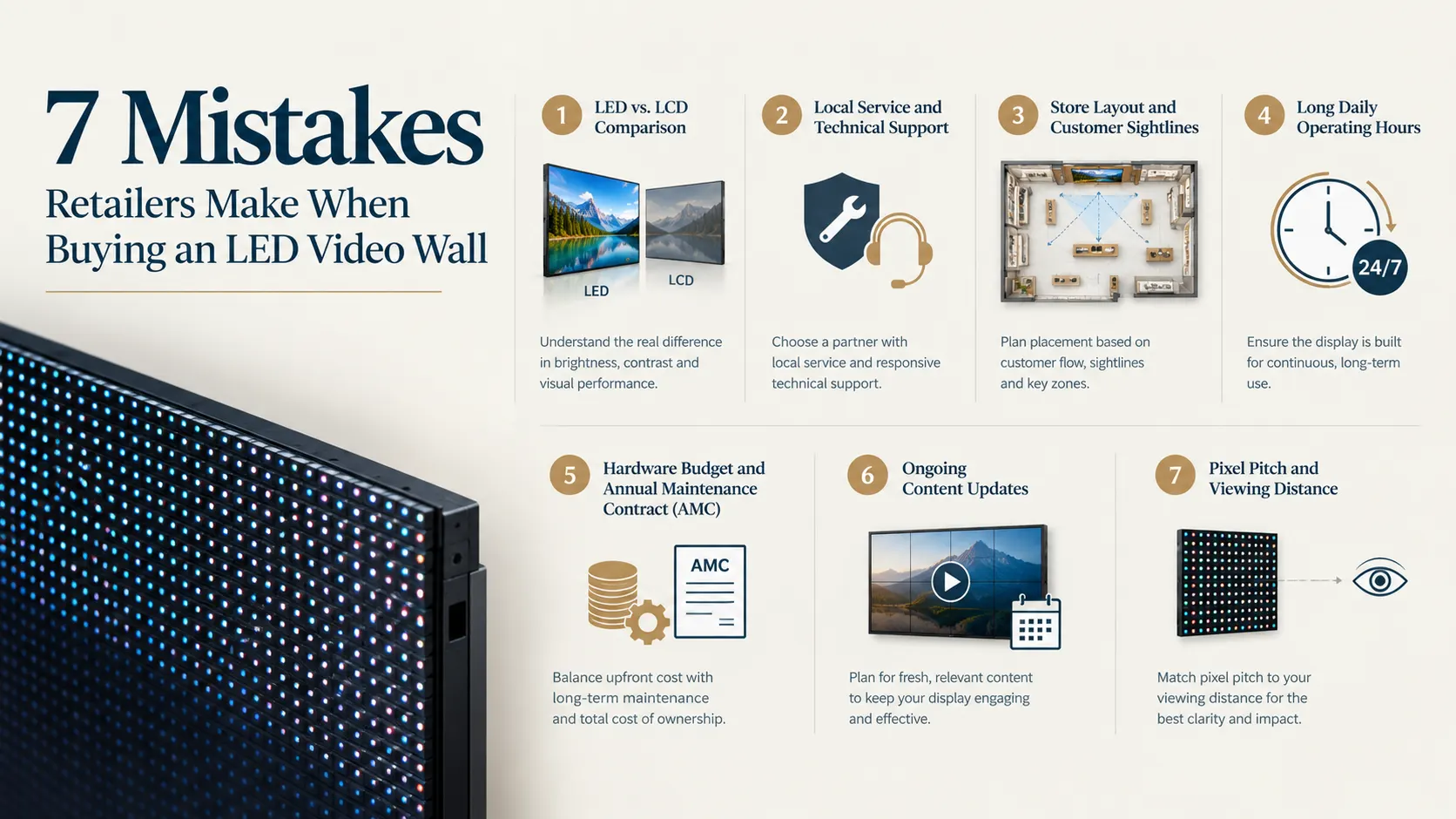
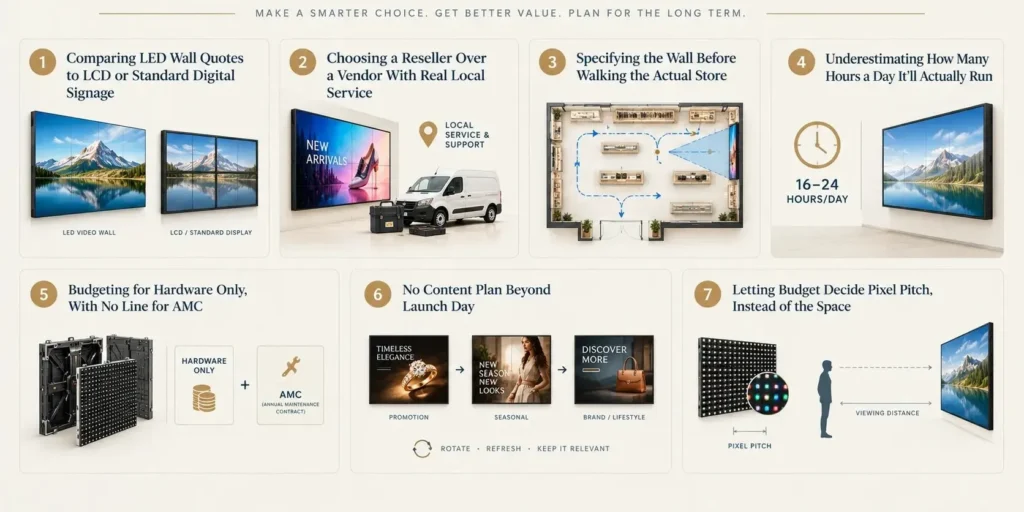
These are the seven mistakes we see most often, some about the wall itself, and most about the decisions made before it ever arrives.
#1. Comparing LED Screen Quotes to LCD or Standard Digital Signage
A frequent source of sticker shock:
- a retailer gets a quote for an LED video wall,
- then compares it to a far cheaper LCD video wall or standard digital signage quote and
- assumes they’re the same product at different prices.
But they are not!
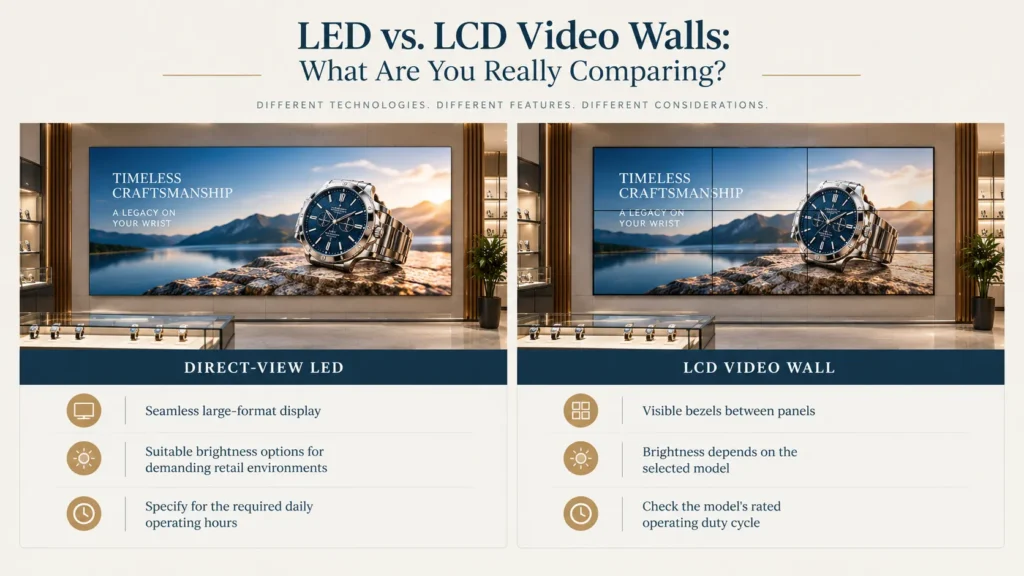
LED screens run seamlessly at any size with no visible bezels, hit far higher brightness for daylight or showroom-lit environments, and are built for continuous commercial duty cycles in a way most LCD panels aren’t engineered for.
A fair comparison is LED against LED — comparing across categories just produces a confusing number, not a useful one.
#2. Choosing a Reseller Over a Vendor With Real Local Service
Retail draws more quotes from resellers and importers than most other verticals, simply because the category is more visible and more competitive.
A reseller can sell you a panel. Whether they can service it eighteen months from now, with a technician who can actually reach your store, is a different question and it’s the one that matters when something fails during your busiest trading week.
Ask directly: is this company installing and servicing the wall themselves, or passing it to someone else after the sale?
#3. Specifying the Wall Before Walking the Actual Store
It’s easy to spec a wall off a floor plan and a budget number.
It’s harder, and more useful, to actually stand where customers will stand, check what they’ll see walking in, and confirm the wall sits somewhere it’ll genuinely be noticed — not just somewhere there happened to be wall space.
Foot traffic patterns and sightlines are store-specific, and a generic spec rarely matches the specific store.
#4. Underestimating How Many Hours a Day It'll Actually Run
A boardroom display runs a few hours a day.
A retail wall often runs the full length of trading hours, every day the store is open — ten, twelve, sometimes more.
That duty cycle has real implications for power planning and component life, covered in more depth in installation requirements guide.
Specifying a wall as if it’ll run occasionally, then running it all day, every day, is a common and avoidable mismatch.
#5. Budgeting for Hardware Only, With No Line for AMC
Retail margins are tight, and AMC is an easy line to cut when a quote needs to come down.
It’s also the line that determines how fast a fault gets fixed once the warranty period ends, and a dark or malfunctioning wall during a sale or festival period costs more in lost impression than the AMC would have.
Price the hardware and the ongoing support together, not as a decision to revisit later.
#6. No Content Plan Beyond Launch Day
This shows up across every retail vertical we work with, covered in more depth specific to jewellery in our jewellery showroom guide.
The short version: a wall that never changes stops earning attention within weeks, and “we will figure out content later” usually means the launch graphic is still running six months on.
#7. Letting Budget Decide Pixel Pitch, Instead of the Space
The most common mistake in the whole category, and the one we have written the most about.
Pixel pitch and viewing distance should be decided by your actual space — how close your customers stand, what the content shows — not by whichever spec a quote happens to lead with.
Our pixel pitch guide and viewing distance guide cover the full logic; the short version is that the quote should follow the spec your space needs, not the other way around.
How We Help Retailers Avoid These
Every retail project starts with the same questions, regardless of vertical:
- how is the space actually used?
- how long the LED wall will operate each day?
- what does it need to display?
This approach has guided our installations across jewellery, textile and general retail spaces throughout India. As an LED display solution provider, we combine project-specific recommendations, transparent investment discussions and in-house service support beyond installation.
Check our Google reviews and customer experiences.